
Flybridge yachts have long represented one of the most desirable configurations in recreational boating. Elevated visibility, open-air operation, and expansive entertaining space continue to draw owners toward the design. Now, new engineering solutions such as the Toma-Top retractable hardtop windshield system, designed for compatibility with most flybridge yachts up to 50 feet and capable of being retrofitted on existing vessels, are redefining how consistently that space can be used.
Rather than forcing owners to choose between fully exposed or permanently enclosed flybridges, Toma-Top introduces a retractable forward windshield integrated into a hardtop structure. The concept is straightforward: preserve the open-air experience when conditions are ideal, while providing meaningful protection when they are not.
This Japanese innovation responds directly to some of the most common real-world challenges flybridge owners encounter:
- Exposure remains the primary limiting factor. In high-sun markets such as Florida and the Caribbean, heat and UV intensity can make extended upper-helm operation uncomfortable during peak daytime hours. Even with overhead shade from a bimini canvas top, glare and reflected heat from deck surfaces often drive operators and guests below deck for relief.
- Wind presents another practical constraint. At cruising speeds, sustained airflow can create operator fatigue and limit onboard communication. In variable conditions, wind combined with spray further reduces comfort, particularly on longer passages.
- Seasonality also affects usage patterns. Early mornings, shoulder seasons, and evening returns frequently bring cooler temperatures that discourage time at the upper helm. As a result, many owners report using their flybridge more at anchor than underway, defaulting to climate-controlled lower helms during transit.
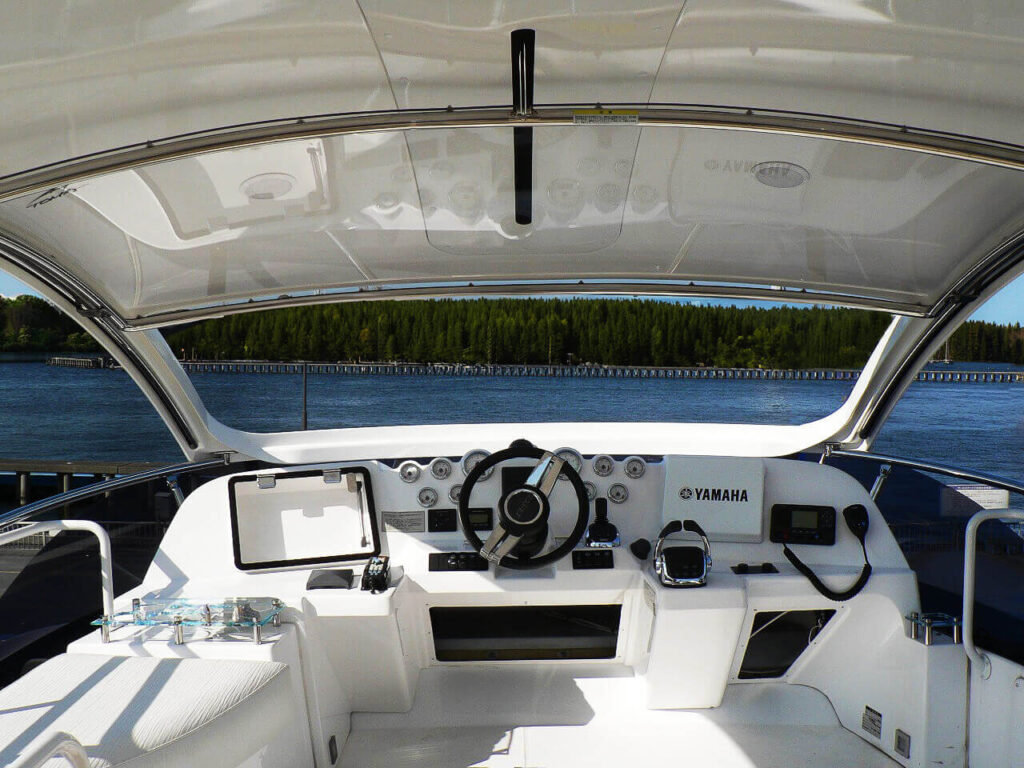
View from the helm with Toma-Top deployed providing enhanced protection forward while maintaining clear sightlines and full command of the horizon.
Historically, canvas and vinyl enclosures have attempted to bridge the gap between exposure and comfort. However, these systems often introduce visibility distortion, ongoing maintenance requirements, and aesthetic compromises. Over time, panels scratch, yellow, tear and require replacement, reinforcing the perception that they are temporary solutions rather than integrated design elements.
By contrast, a retractable hardtop windshield provides structural, aesthetically appealing, marine-grade protection without permanently enclosing the space. When deployed, it reduces wind intrusion, minimizes spray, and creates a more controlled helm environment. When retracted, it restores the open configuration that defines the flybridge experience. Because it can be retrofitted onto most existing flybridge yachts up to 50 feet, it offers current owners the opportunity to enhance comfort and usability without replacing their vessel.
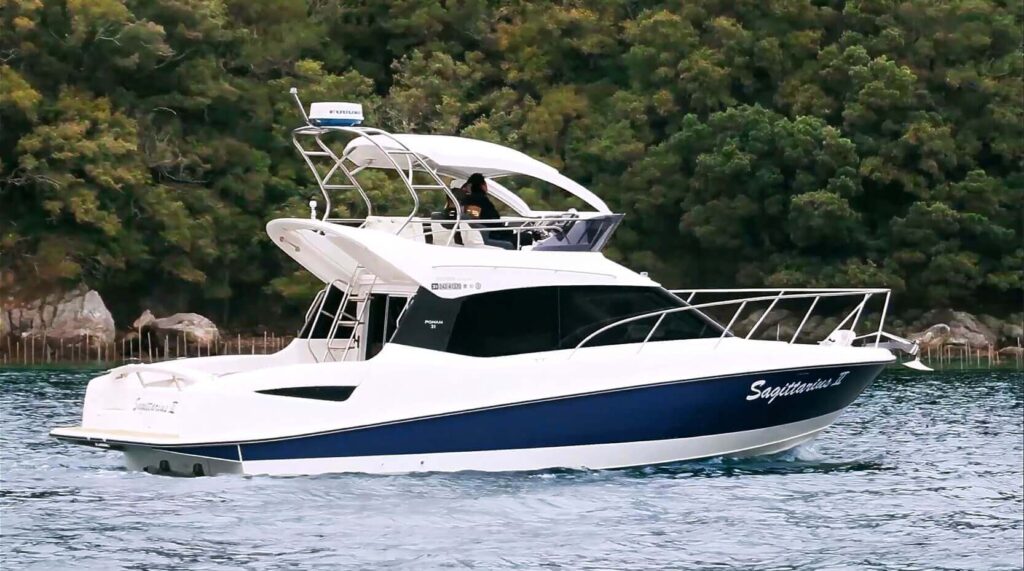
Toma-Top enhances the flybridge with clean design lines while expanding protection and usability in changing conditions.
For builders and brokers, this type of adaptability is increasingly relevant in buyer conversations. Today’s owners expect flexibility and the ability to cruise comfortably in variable weather while maintaining the elevated sightlines and social advantages that draw them to flybridge yachts in the first place.
As yacht design continues to evolve toward multi-season, multi-climate usability, integrated solutions that expand functional comfort are gaining traction. The flybridge itself remains as desirable as ever. The difference now lies in how consistently it can be enjoyed not just on perfect-weather days, but across a broader range of conditions.
In that respect, innovations like Toma-Top signal an important shift: enhancing the flybridge without altering its defining appeal.
Learn more about the Toma-Top at www.toma-top.com